Ponding That Lingers
Dirt rings, algae, and water that sits for days after rain mark low spots where the roof lost slope or a drain sits high.
Low-Slope Roof Replacement
As an Ashland flat roofing contractor, we replace and rebuild low-slope roofs, from wet insulation and ponding near drains to worn built-up and single-ply systems.
Is This Roof A Fit?
As your Ashland flat roofing contractor, we settle the path before the membrane. These checks sort out what the roof can take.
| Factor | Good Fit | Fix First Or Look Elsewhere |
|---|---|---|
| Moisture | Dry insulation under most of the roof | Wet boards found across several bays |
| Existing layers | One roof on the deck, recover still allowed | Two roofs already, so the next step is tear-off |
| Drainage | Water clears in a day or two | Ponding that stays for days near drains or walls |
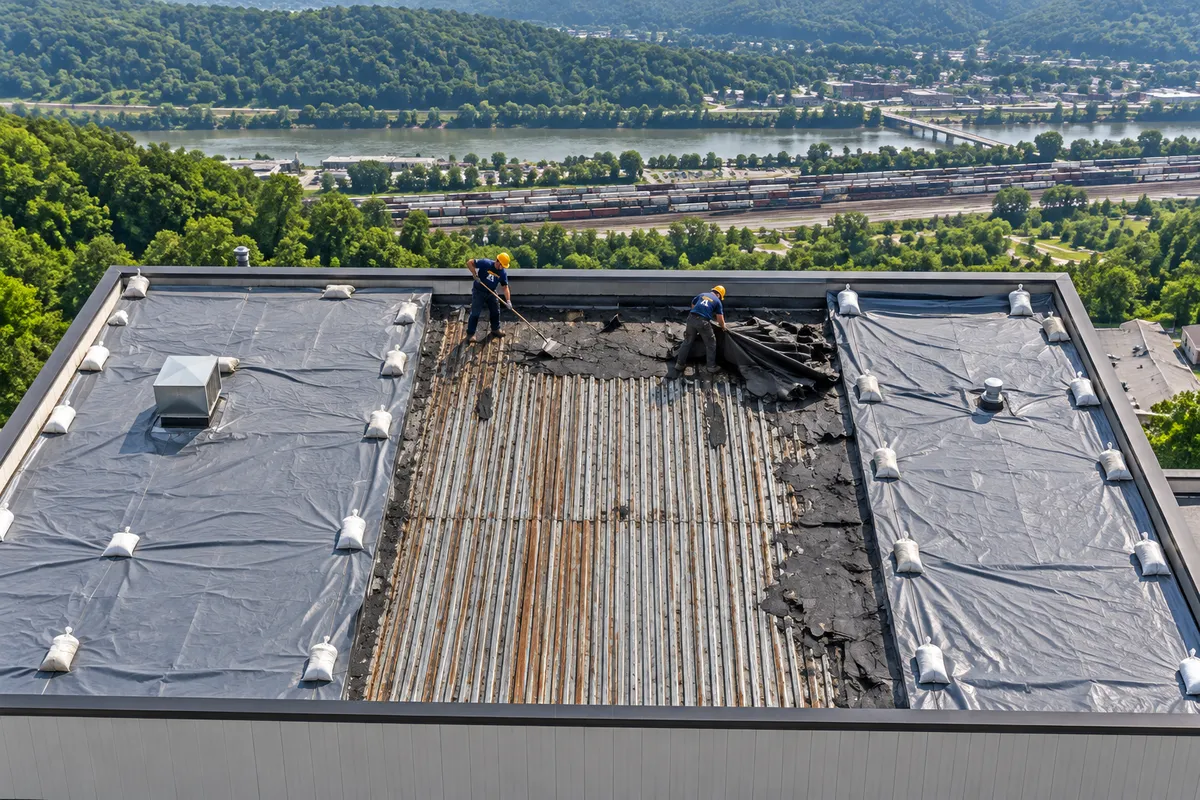
| Deck | Solid steel, wood, or concrete from inside | Rusted flutes or rotted boards that need replacing |
| Edges and doors | Room for added insulation height | Thresholds and edge metal already at their limit |
Roof Conditions
Low-slope roofs fail in a few familiar ways. Each one changes the scope of the job.
Dirt rings, algae, and water that sits for days after rain mark low spots where the roof lost slope or a drain sits high.
Raised blisters on built-up and modified roofs trap moisture between plies and split open under summer sun and foot traffic.
Water that gets in at a split seam spreads sideways through the boards, leaving soft areas that read fine from the surface.
The upslope side of a rooftop unit curb holds water with nowhere to go unless a cricket splits it toward the drain.
Cracked drain bodies and roofs with no overflow scupper back water up during heavy rain and push it against the walls.
Rusted gravel stop and loose gutters let water behind the membrane at the perimeter, often over rotted wood nailers.
Options
Every flat roof job starts from the same question: can the old roof stay, or does it come off?
Every layer comes off to the deck, rusted flutes and rotted nailers are replaced, and a new insulated system goes on.
Over a single dry existing roof, cover board and a new TPO or EPDM sheet go on top with edges raised to match.
Sloped boards and small crickets build pitch toward drains and around curbs, which ends the ponding that shortens roof life.
New drain bodies or retrofit inserts, rebuilt scuppers, and overflow scuppers where interior drains have no backup.
Benefits
Getting the layers right under the membrane is what makes a flat roof last.
Taper and crickets move water off the field and away from curbs and walls, so the membrane is not sitting in puddles.
New dry polyiso replaces soaked boards and brings the roof to the energy code level a full replacement requires.
Edge metal, coping, and scuppers are set at the new roof height and sealed to the new membrane instead of reused.
A single new sheet replaces years of patches, so the next leak call starts from a known, documented roof.
Ponding gets fixed in the insulation under the membrane. A roof walk shows where the slope is missing and which drains sit high.
Process
The building stays dry because only one section is open at a time.
A moisture survey and core cuts map wet areas, count existing layers, and mark ponding and drain heights.
The findings decide repair, recover, or tear-off, and set the taper plan for each drain and curb.
The crew removes one area to the deck after checking the National Weather Service forecast, and replaces any bad deck.
Insulation, taper, cover board, and membrane go down on that section, and the edge is sealed to the old roof that night.
Drains are water-tested, edge metal is fastened, and the finished roof is walked and photographed.
Related Services
A flat roof rebuild ends with a membrane. Leaks at a few details may only need repair.
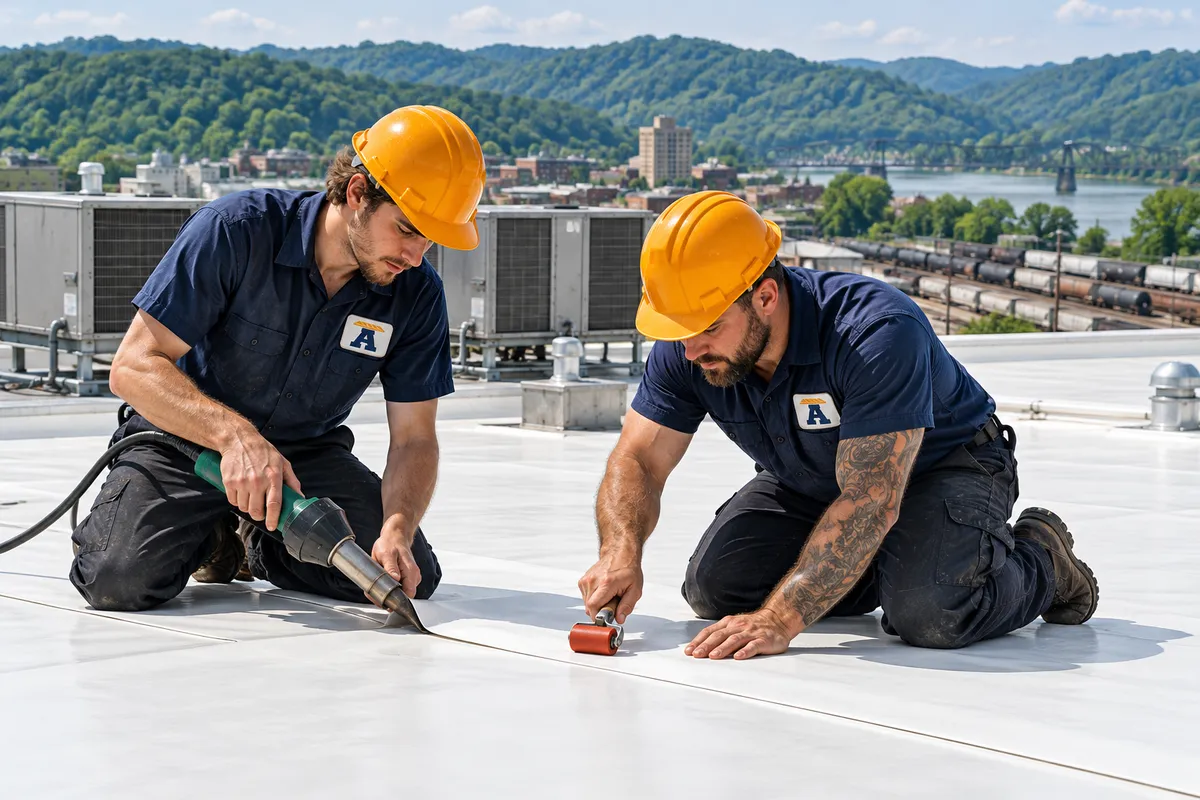
TPO is the most common sheet on rebuilt flat roofs, with welded seams and a white surface.
TPO RoofingIf core cuts show dry insulation and one leaking detail, a repair handles it for now.
Commercial Roof RepairQuestions
More answers are on the commercial roofing FAQ.
Cost
Roof size, the system, insulation and taper thickness, and how many curbs, drains, and skylights need flashing. Edge metal and coping lengths add to it.
Hidden conditions found at tear-off, such as rusted deck, rotted nailers, and wet boards, add more. Unit prices for those are agreed before work starts.
Ponding
Ponding is fixed with slope. Tapered insulation and crickets built during a replacement send water to drains and scuppers, and drains set too high get lowered or replaced.
A new membrane alone over the same low spots leaves the puddles in place.
Recover
Sometimes. A recover needs dry insulation, a solid deck, and only one existing roof. Code limits recovers over wet roofs and multiple layers, so core cuts and the permit office settle it.
Built-Up
Yes. Old built-up roofs are often torn off and replaced with TPO or EPDM over new insulation. Gravel and felts come off to the deck, which also lets the crew inspect it fully.
Moisture
Infrared scans at dusk, capacitance or impedance meters on a grid, and core cuts all find wet boards. Each core cut is patched the day it is taken.
Edges
New insulation and taper raise the finished roof. Edge metal, gutters, scuppers, parapet flashing, curb heights, and door thresholds onto the roof all get checked against the new height.
Timing
Only one workday per section. The crew opens what it can close that day and seals the edge to the old roof with a night seal before leaving.
Tell us where water sits on the roof and where it shows inside. Core cuts and a moisture check come first.