
Leaks at Added Units
Rooftop units added over the years often sit on curbs flashed too low for the water around them. Curb extenders and new flashing fix it.
Greenup County · Storefronts
As a Flatwoods commercial roofing contractor, we replace and repair storefront, office, and warehouse roofs, and check early whether new heights or units raise a zoning question.
Rooflines And Zoning
Height and equipment questions shape the work of a Flatwoods commercial roofing contractor. A straight tear-off and replace at the same height rarely touches zoning in Flatwoods. A taller roof or new visible equipment can.
Flatwoods keeps its own zoning information, and the Greenup County contact sheet sends building questions to the city office. We ask both questions in one call. Answers go in the job file before any material is ordered.
Roof Conditions
Small commercial roofs here share a handful of problems, most of them at the details.
Rooftop units added over the years often sit on curbs flashed too low for the water around them. Curb extenders and new flashing fix it.
Storefront roofs with parapets on three sides hold water at the back wall when the scupper clogs. An overflow scupper gives water a second exit.
Shrinking sheet stretches at walls and curbs until the flashing tears at the corners. New sheet and corner pieces replace it.
Office skylights leak at the curb flashing and frame sealant before the glazing itself fails. Fresh flashing and sealant stop it.
One tenant sees the stain, but the source often sits above the unit next door. Tracing upslope finds the real source.
Through-wall scuppers rust at the seams and leak into the wall below the roof line. New scuppers sealed to the membrane end it.
Benefits
A Flatwoods reroof planned with the roofline in mind avoids surprises after the panels or sheet go on.
Height and equipment changes are cleared before work starts, so nothing stops once the roof is open.
Curbs get extenders where added insulation would leave flashing too short.
New scuppers sized to the roof area and sealed to the membrane drain parapet roofs properly.
Multi-tenant buildings get one continuous roof instead of a patchwork of separate repairs.
Office skylights get new curb flashing and frame sealant during the reroof, which ends the drip over desks and hallways.
Our Services
Most Flatwoods jobs are low-slope storefront and office roofs, with some steel buildings.
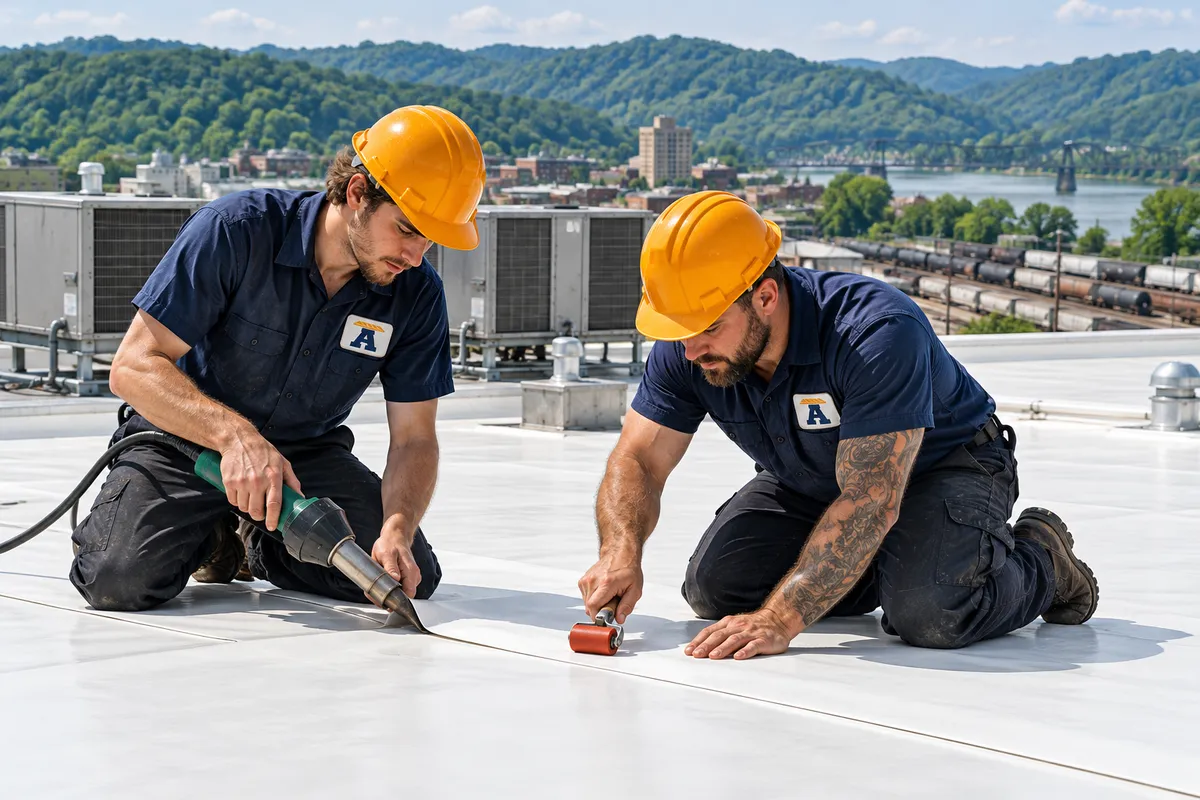
White welded sheet with flashing up and over parapets and new coping at the street side. Coping is replaced along the front.
TPO RoofingFraming and panels over a failing flat roof, once height and zoning are cleared. Panels follow the cleared height.
Commercial Metal RoofingFlashing reset around units and skylights that leak into tenant spaces. Tenants get notice before work.
Commercial Roof RepairRubber sheet over one dry existing roof where the edge height allows. Edge heights are checked first.
EPDM RoofingTell us what is changing up top. We check height and zoning questions before the scope is final.
Process
Questions about height and equipment are answered before materials are ordered.
We measure parapet, curb, and threshold heights and note every unit, skylight, and scupper on the roof.
One call to the city covers zoning for any height change and the building question for the job.
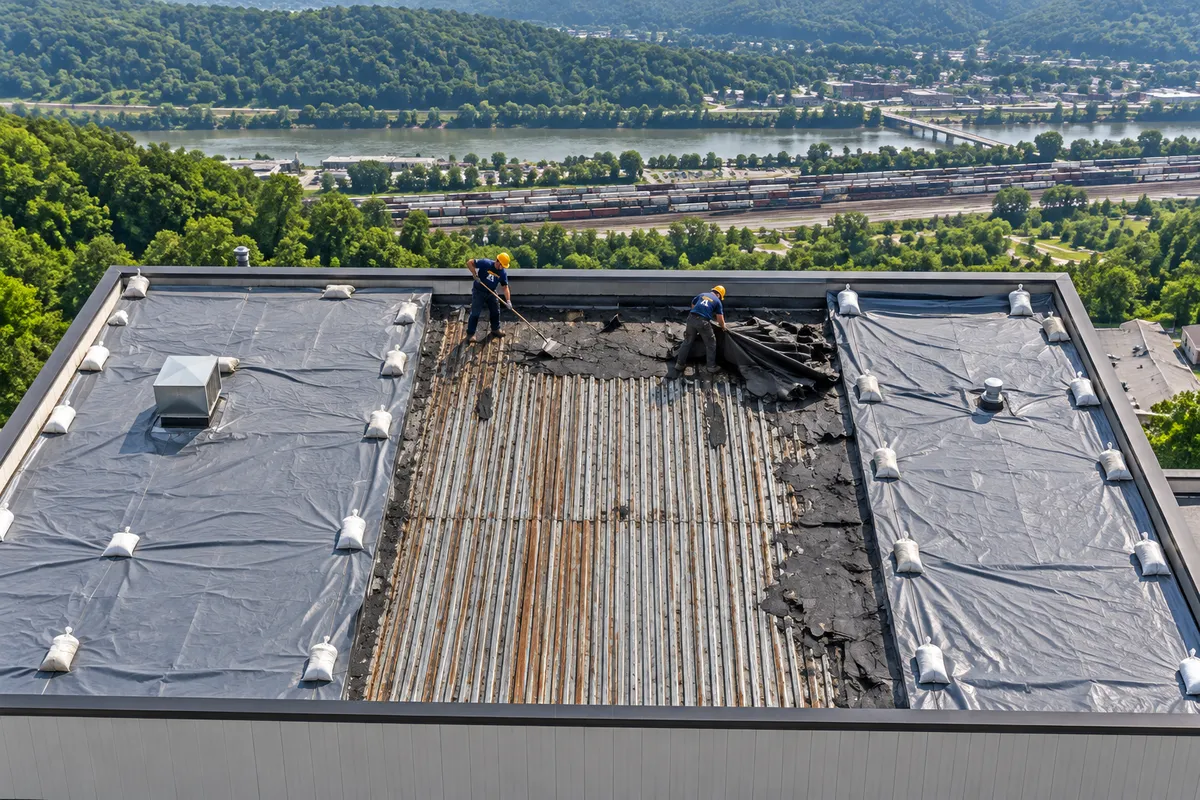
Each section is torn off, insulated, and sheeted, with tenants told which bays are open that day.
Curbs get extenders where needed, and units, skylights, and scuppers are flashed to the new membrane before coping goes on at the street side.
Flashing, coping, and scuppers are reviewed on a final walk before photos close the job.
Commercial Roofing
We take commercial roofing work in Flatwoods and the towns below, eleven places in all. Outside them? Call us or send us a message.
Flatwoods
Storefronts and offices where rooflines meet zoning rules.
Questions
More answers are on the commercial roofing FAQ.
Zoning
It matters when the roof gets taller, adds visible equipment, or brings retrofit framing. A same-height tear-off rarely does.
We ask the city about zoning and building in one call before ordering material.
Height
Yes. Taper and code insulation raise the finished roof, so coping, edge metal, scuppers, and door thresholds onto the roof are checked against the new height.
Tenants
Usually. Sections are opened and closed in one workday, and tenants under each section hear ahead of time which days are noisy.
Screens
Screen walls and new units visible from the street can raise zoning questions in Flatwoods, so we include them in the same call as the roof.
Skylights
Most skylight leaks start at the curb flashing or the frame sealant. New flashing set higher and fresh sealant at the frame stop them without replacing the glazing.
Strip Centers
Yes. Replacing the whole strip at once puts one continuous membrane over every tenant, instead of separate patches that meet at seams between spaces.
Work runs section by section so each tenant knows which days are noisy. Each unit above a tenant space gets its curb flashed during the same visit.
Warehouses
Yes. Small warehouses usually get mechanically attached TPO or EPDM over new insulation, with taper toward the drains or a back scupper.
Dock doors and loading areas stay open while sections are worked, and dumpster and lift spots are set away from truck traffic.
Send the address and what is changing on the roof. Height and zoning get checked first.