Residue Around Exhaust Fans
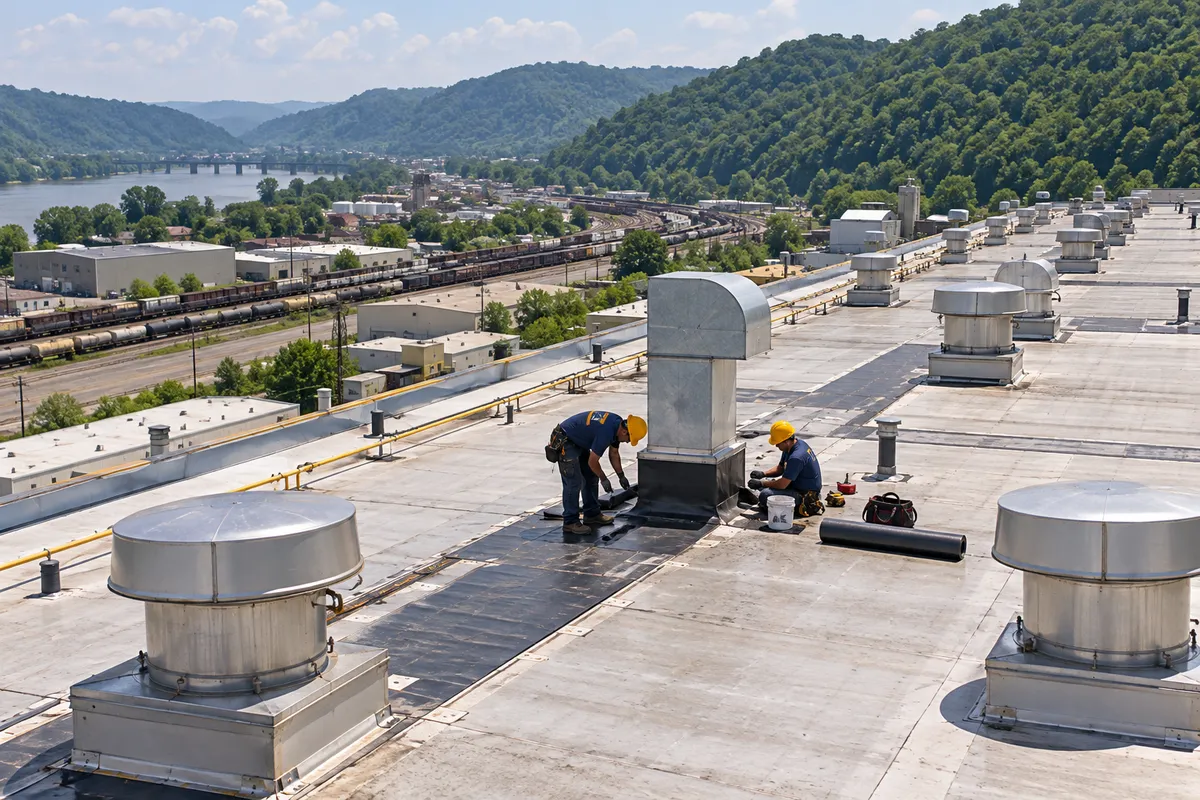
Grease and oil from hoods and process vents soften some membranes and swell rubber in a ring around the fan. Resistant sheet in that zone stops it.
Plants And Large Warehouses
As an Ashland industrial roofing contractor, we replace and repair roofs on plants and large warehouses, phasing the work so production keeps running underneath.
Is This Roof A Fit?
As your Ashland industrial roofing contractor, we plan for the equipment, exhaust, and traffic a plant roof carries. These factors shape the plan.
| Factor | Good Fit | Fix First Or Look Elsewhere |
|---|---|---|
| Exhaust on the roof | Office-type vents or none | Grease, oil mist, or chemical residue near fans and stacks |
| Equipment | Units on flashed curbs or rails | Heavy units and dust collectors set straight on the sheet |
| Steel deck | Solid flutes seen from inside | Rusted flutes over production lines that need new deck |
| Production | Shutdown windows set with maintenance | No access plan for bays over sensitive equipment |
| Roof levels | One level or clean transitions | Several levels mixing metal and membrane with open joints |
Roof Conditions
Plant roofs wear out first where people, equipment, and exhaust meet the membrane.
Grease and oil from hoods and process vents soften some membranes and swell rubber in a ring around the fan. Resistant sheet in that zone stops it.
Dust collectors and big RTUs on steel supports load the sheet at every leg unless the supports sit on flashed curbs or pads. Rails on curbs spread that load.
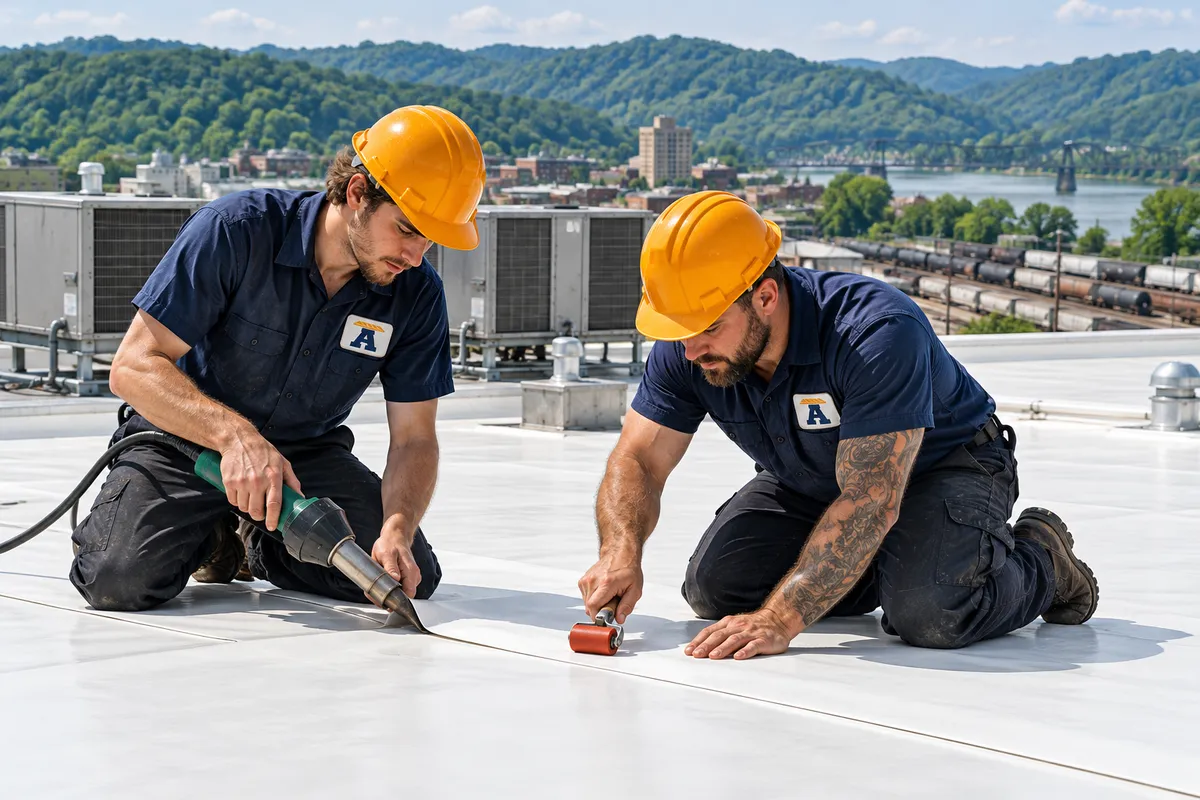
Daily walks from the roof hatch to each unit scuff the membrane bare where no walk pads were laid. Pads along each route protect it.
Pipes resting on the sheet drag across it as they expand, cutting slowly until a leak opens over the floor. Pipe stands lift them clear.
Large roofs move water long distances, and a single clogged interior drain backs up an entire bay. Overflows give a second way out.
Hot stacks and furnace flues need metal heat shields and clearance at the curb so the membrane does not cook.
Options
Systems and details are chosen for slope, exposure, and the maintenance traffic the roof carries.
Bays are torn off and closed one at a time, with crane and hoist spots placed to keep forklifts and trucks moving below.
PVC or grease-rated sheet around kitchen and process exhaust, checked against the maker's chemical resistance chart.
Walk pads from the hatch to each unit, flashed equipment rails, guardrails at openings, and pipe stands that lift lines off the sheet.
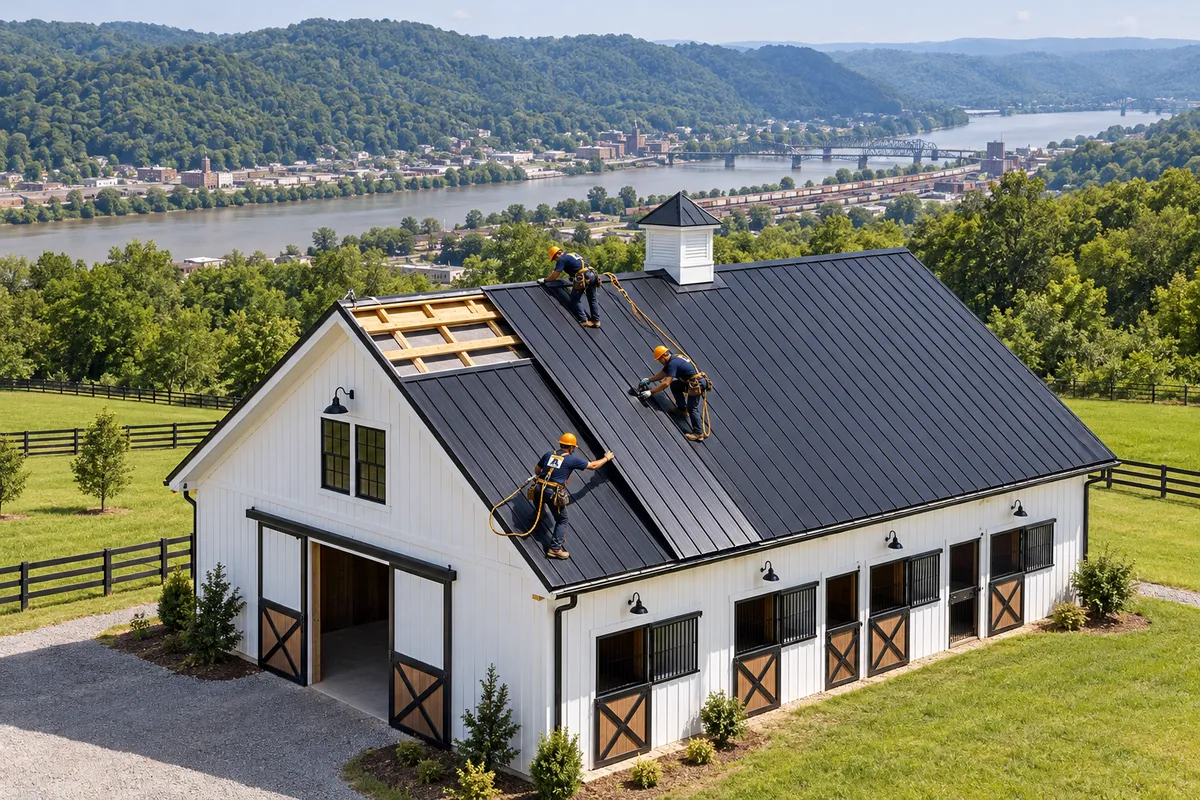
Standing seam or R-panel on pitched high bays, tied to membrane on flat additions at a flashed transition.
Benefits
A plant roof built for its own exposure stays in service longer and costs less to keep running.
Sheet rated for the residue on your roof holds up around fans and vents where a standard sheet softens. Catch pans and regular cleaning near the vents add a second layer of protection there.
Walk pads, guardrails at openings, and clear paths protect both the staff on the roof and the membrane under them, every single working day of the year.
Lifting conduit and gas lines onto supports removes a steady source of cuts in the field.
Taper toward interior drains and overflow scuppers keep a single clogged drain from flooding a section.
Call with the bays that leak and the equipment under them. Phasing starts with knowing what cannot get wet.
Process
Plants stay in production because the roof is opened and sealed in sections the same shift.
We walk the roof with plant maintenance, map exhaust and equipment, and check the steel deck from inside over each line.
The plan sets which bays go first, where cranes stand, and when rooftop units shut down with your maintenance team.
Each section is torn off, the deck is repaired, and insulation and membrane go down before the shift ends.
Resistant sheet goes around exhaust, supports get flashed curbs, and conduit is lifted onto pipe stands.
The finished roof is walked with your staff, with service paths and hatch details reviewed on site.
Related Services
Most plants use more than one roof system, tied together at flashed transitions.
Pitched high bays and additions take standing seam or R-panel steel.
Commercial Metal RoofingQuestions
More answers are on the commercial roofing FAQ.
Deck
Rusted flutes get checked from inside before work starts, and new deck goes in before insulation as that bay opens. Areas over sensitive lines are covered from below.
Deck replacement is priced per unit ahead of time, so the work keeps moving when rust turns up.
Basics
Plant roofs carry heavy equipment, exhaust, and constant service traffic, plus production schedules that limit when the roof can open.
The roof is also a workplace for maintenance staff, so walk pads and guardrails at openings are part of the design.
Exhaust
PVC or specialty sheet rated for the exposure goes near exhaust that would break down a standard membrane. Kitchen fats and cutting oils are the usual culprits.
Check the maker's resistance chart against the actual residue first.
Phasing
The job is split into sections that are torn off and closed in one shift, with a night seal at each open edge. Crane spots keep forklifts moving, and odor controls protect air intakes during adhesive work.
Systems
Mechanically attached TPO or EPDM covers big flat areas fast through the steel deck. Pitched plant roofs take standing seam or R-panel.
Heavy traffic calls for thicker sheet and more walk pads.
Access
Walk pads go along every route from the hatch to each unit. Equipment rails sit on flashed curbs, hatches are flashed like curbs, and conduit is lifted onto pipe supports.
Send the roof area, the bays that leak, and your shutdown windows. A walk with your maintenance lead comes first.