
Wet Boards Under Old Sheet
Years of condensation and small leaks leave insulation damp under a roof that looks fine from above. Core cuts find them before tear-off.
Boyd County · River Confluence
As a Catlettsburg commercial roofing contractor, we install and replace roofs on a schedule built around river dew, so welds and seam tape go onto a dry surface.
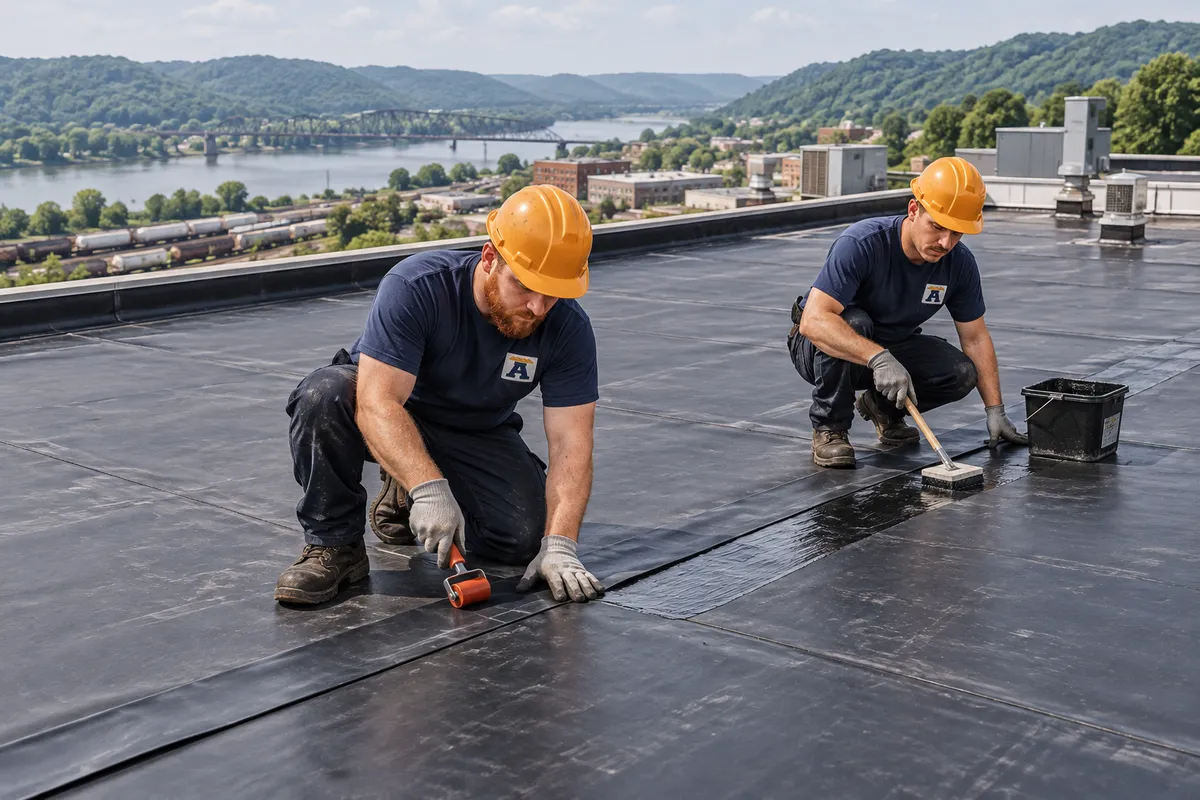
River Humidity
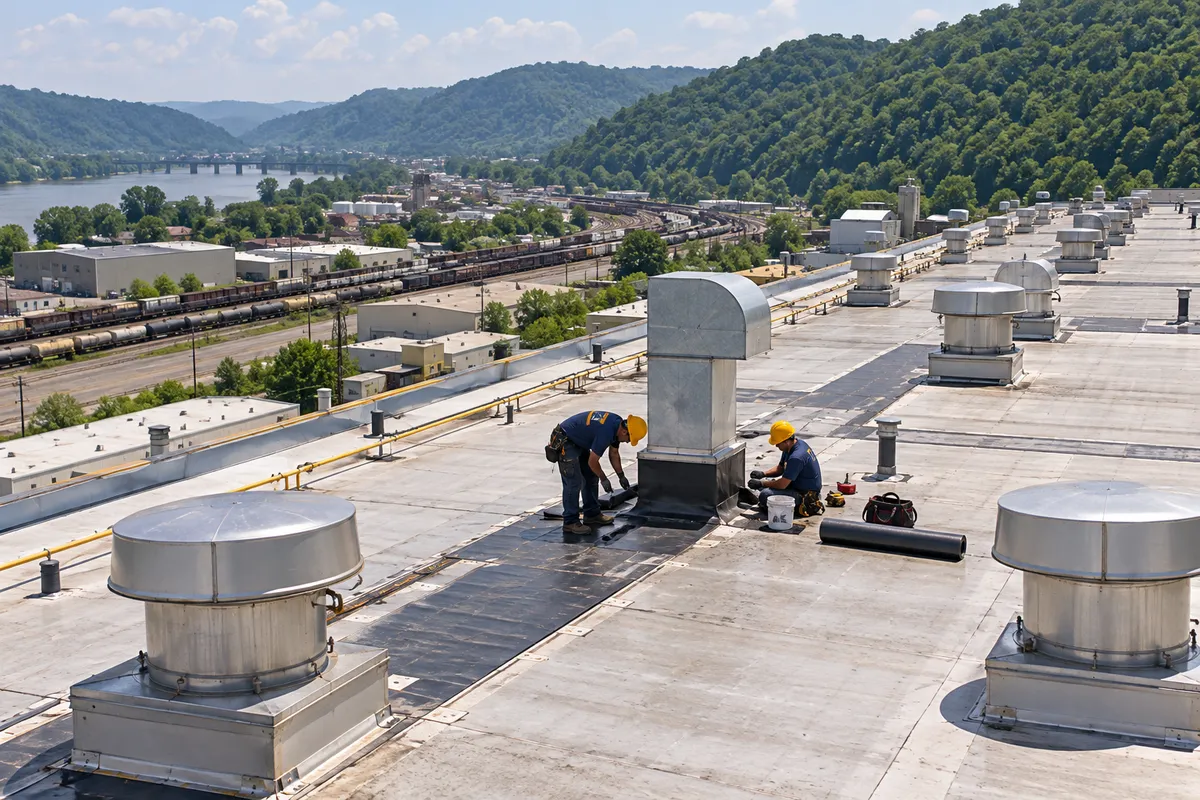
Dew sets the clock for a Catlettsburg commercial roofing contractor. Catlettsburg sits where the Big Sandy River meets the Ohio, and the damp air leaves heavy dew on roofs most mornings. TPO seams and EPDM tape both need a dry surface to hold.
Work days here start later, after the sheet and insulation dry, and test welds repeat as the air warms. On the humid days, tear-off fills the early hours.
Roof Conditions
Damp air shows up in the roof in a few ways, some of them hidden under the surface.
Years of condensation and small leaks leave insulation damp under a roof that looks fine from above. Core cuts find them before tear-off.
EPDM tape set on a damp surface never bonds fully and lifts first at T-joints near drains. Clean, dry laps and fresh primer fix them.
Moist air keeps steel laps wet longer, and rust starts where the butyl tape has dried out. Fresh tape and stitch screws close them.
Moisture trapped between plies expands in summer heat and lifts blisters across built-up roofs. Removing the wet layers ends them.
Condensation under cold decks drips inside on winter mornings and gets mistaken for a roof leak. A vapor retarder addresses the cause.
Leaves and silt slow drains, and standing water keeps the membrane wet even longer. Cleaned drains and new rings help.
Benefits
A Catlettsburg roof built on dry materials starts its life without trapped moisture.
Welds and taped seams go down only once dew is gone, which is what makes them hold.
Boards stay covered until installed, so no wet material ends up sealed under the new sheet.
A vapor retarder where specified slows damp indoor air rising into the insulation.
Drains are cleaned out and reset with new clamping rings as part of the replacement.
Starting after the dew burns off keeps the work steady instead of stopping and restarting through the morning.
Our Services
Membrane and metal roofs here all share one rule: no work on a wet surface.
Rubber sheet with laps primed and taped only after the surface is dry. T-joints are patched every time.
EPDM RoofingWelded white sheet with a fresh test weld whenever the air changes. Welds are probed end to end.
TPO RoofingRemoval of damp insulation and old layers down to the deck, then a dry rebuild. The deck is checked as it opens.
Flat RoofingLarge roofs replaced in sections around operations near the river. Bays are done one at a time.
Industrial RoofingCondensation and leaks look alike from below. A roof walk and a look at the deck from inside sort out which one you have.
Process
The daily schedule follows the dew, and every step stays dry.
Core cuts and a look at the deck from inside show trapped moisture and where condensation forms.
The state Boyd County sheet lists the same local building inspector for Catlettsburg and Ashland.
Crews begin once dew has burned off the roof, then weld or tape with fresh test welds through the day.
Old insulation that holds trapped moisture is removed section by section, and dry boards from covered storage go down in its place.
Stored boards stay covered each night, and the finished roof is probed and photographed.
Commercial Roofing
We take commercial roofing work in Catlettsburg and the towns below, eleven places in all. Outside them? Call us or send us a message.
Catlettsburg
Roofs at the Big Sandy mouth, where damp air sets the schedule.
Questions
More answers are on the commercial roofing FAQ.
Humidity
Heavy dew from the Big Sandy and Ohio delays welding and adhering until the sheet dries. We start later, cover stored insulation overnight, and repeat test welds as temperatures change.
Permits
The state Boyd County contact sheet lists the same local building inspector for Catlettsburg and Ashland, so the permit goes there.
Condensation
Drips that show on cold mornings with no rain are often condensation on the underside of the deck. Leaks follow rain. A walk on top and a look underneath tell them apart.
Storage
Boards that pick up dew or rain get sealed under the new sheet wet. Covering them each night keeps the roof dry from the start.
EPDM
Primer and seam tape need a clean, dry surface. Tape pressed onto damp rubber never fully grabs, and those laps open first.
Timing
Later than in drier spots. The crew checks the sheet and stored insulation for dew first and starts welding or taping once they are dry to the touch.
On humid days that pushes seam work toward late morning, with tear-off and cleanup filling the early hours.
Metal
They do at the laps and screw lines. Damp air keeps steel wet longer, so rust starts where butyl tape has dried out or a washer has cracked.
Fresh tape, stitch screws, and new washers close those spots, and a vapor retarder inside cuts winter condensation.
Tell us what you see inside and when it shows up. We check for moisture before quoting.